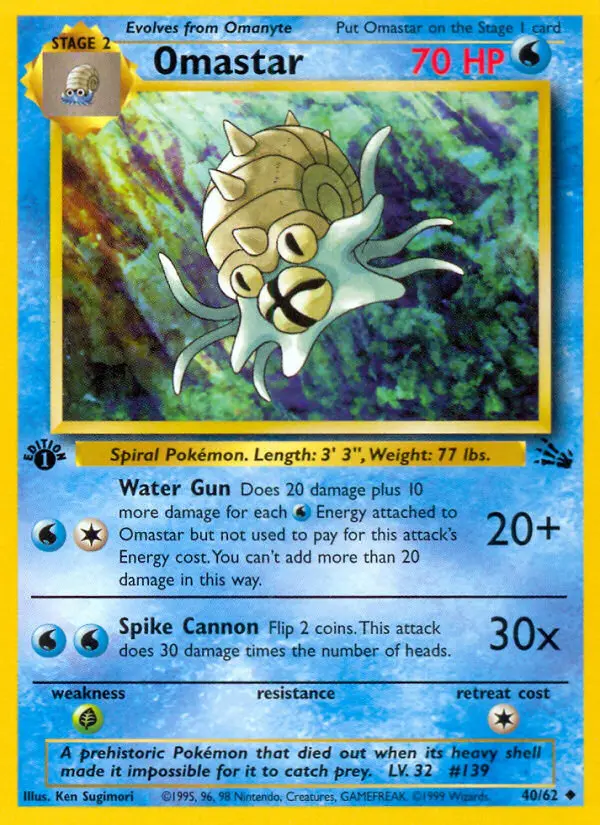
Image © The Pokémon Company, shown for identification.
Omastar
Fossil · #40/62
Omastar (40/62), the Uncommon from Fossil, has an estimated ungraded market price of about $1.45.
As of September 14, 2026 · tracked daily by Riffle · estimates, not financial advice · how these numbers work
The modeled fair value of this card, with a confidence grade: what it should trade at, not just what it lists at. Part of Riffle premium, alongside price history and the full graded ladder.
About Omastar
Omastar is a Uncommon (40/62) from the Pokémon Fossil set, released October 10, 1999. Ungraded copies currently trade at an estimated market price of $1–$2. The artwork is by Ken Sugimori. Riffle tracks its market price daily; graded (PSA) comps and full price history are available with Riffle.
Other versions of Omastar
Omastar appears on 12 different cards across the sets Riffle tracks, at very different values. This page covers #40/62 from Fossil; the collector number printed at the bottom of the card tells them apart.
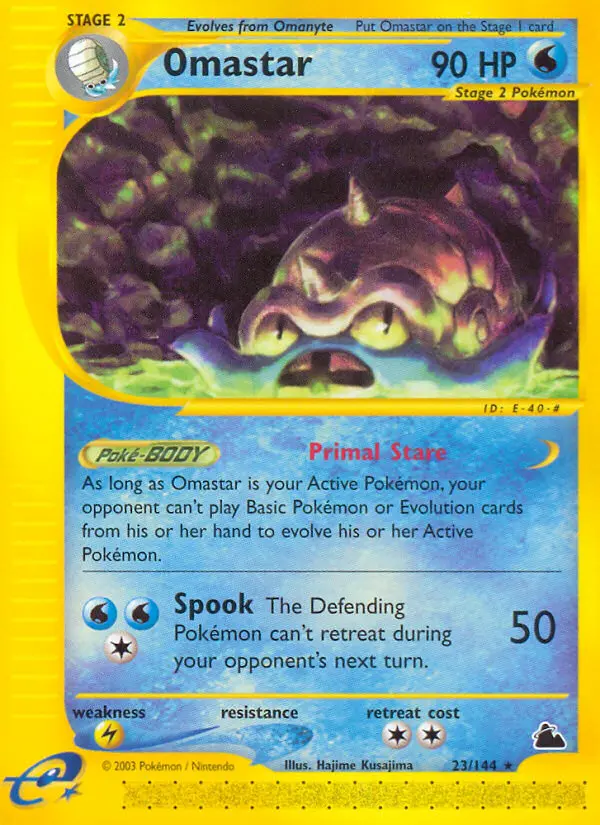 Skyridge · #23/144$27–$36Rare
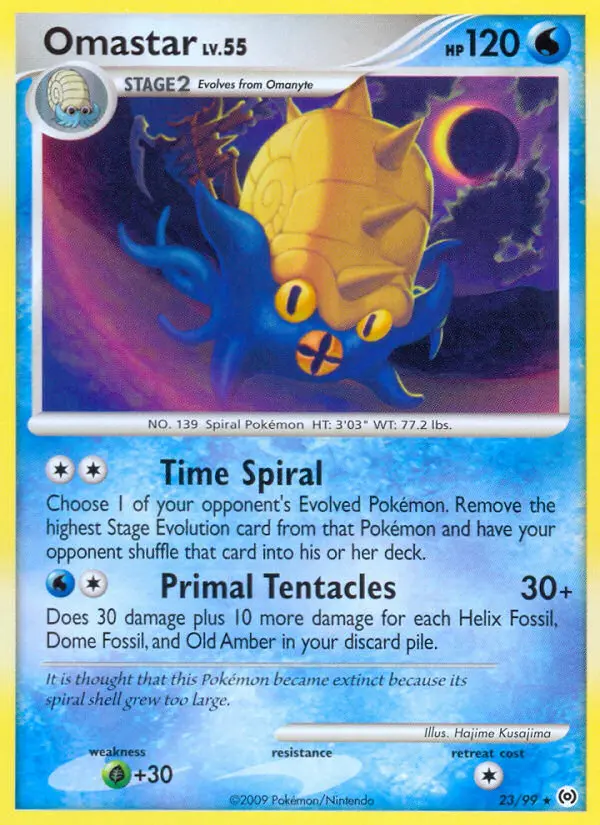 Arceus · #23/99$3–$4Rare
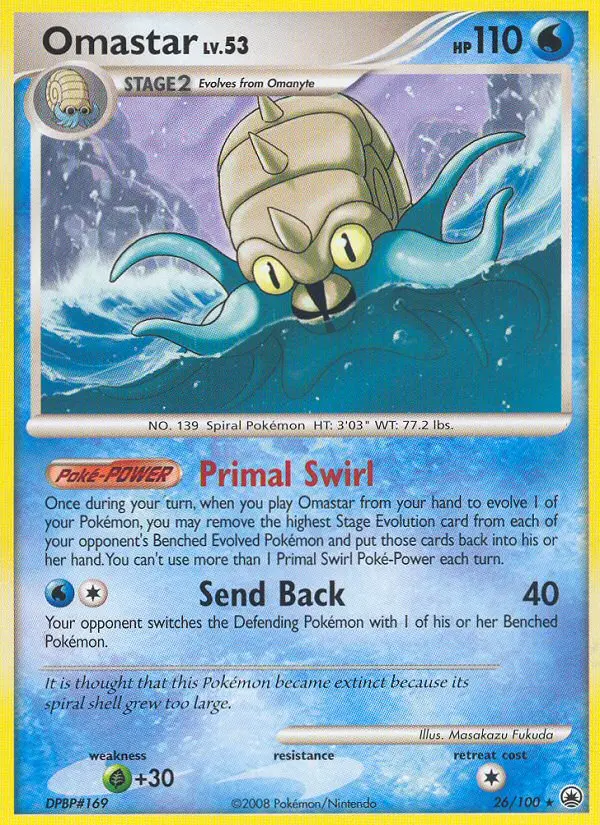 Majestic Dawn · #26/100$2–$4Rare
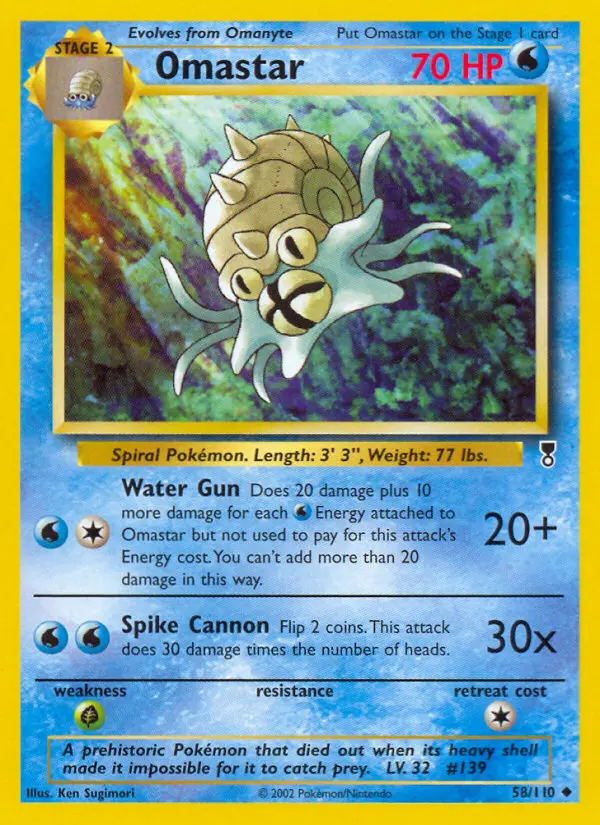 Legendary Collection · #58/110$2–$3Uncommon
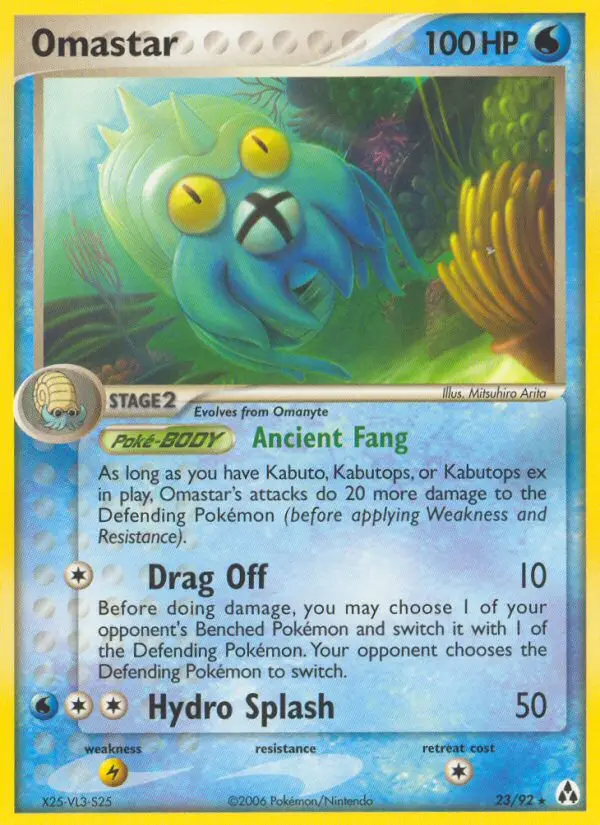 Legend Maker · #23/92$2–$3Rare
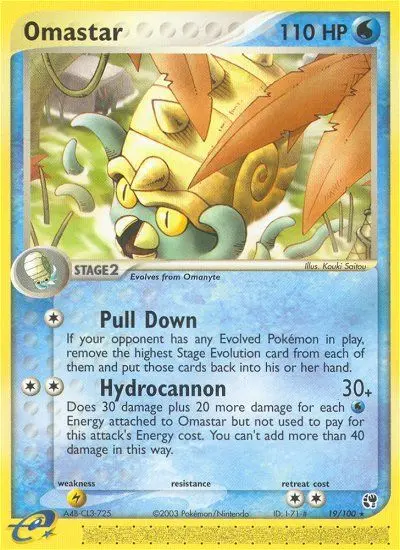 Sandstorm · #19/100$2–$3Rare
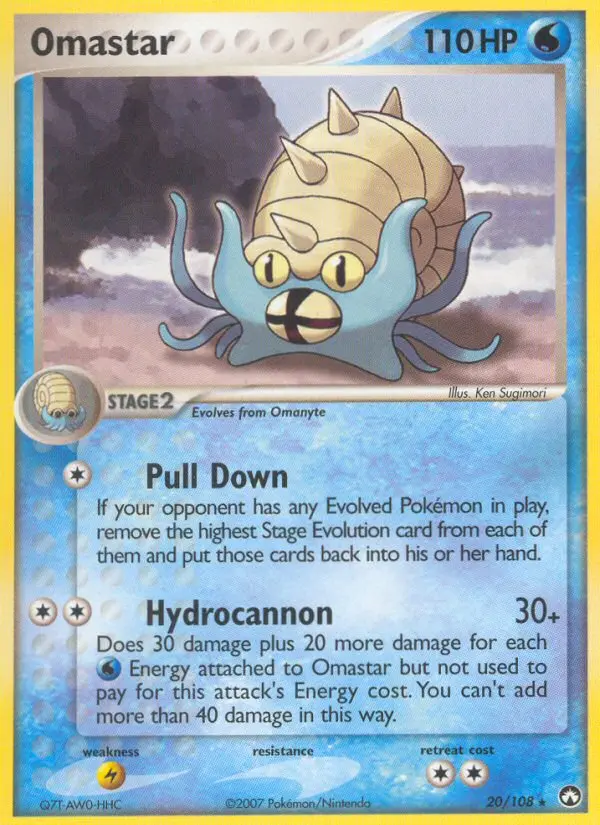 Power Keepers · #20/108$1–$2Rare
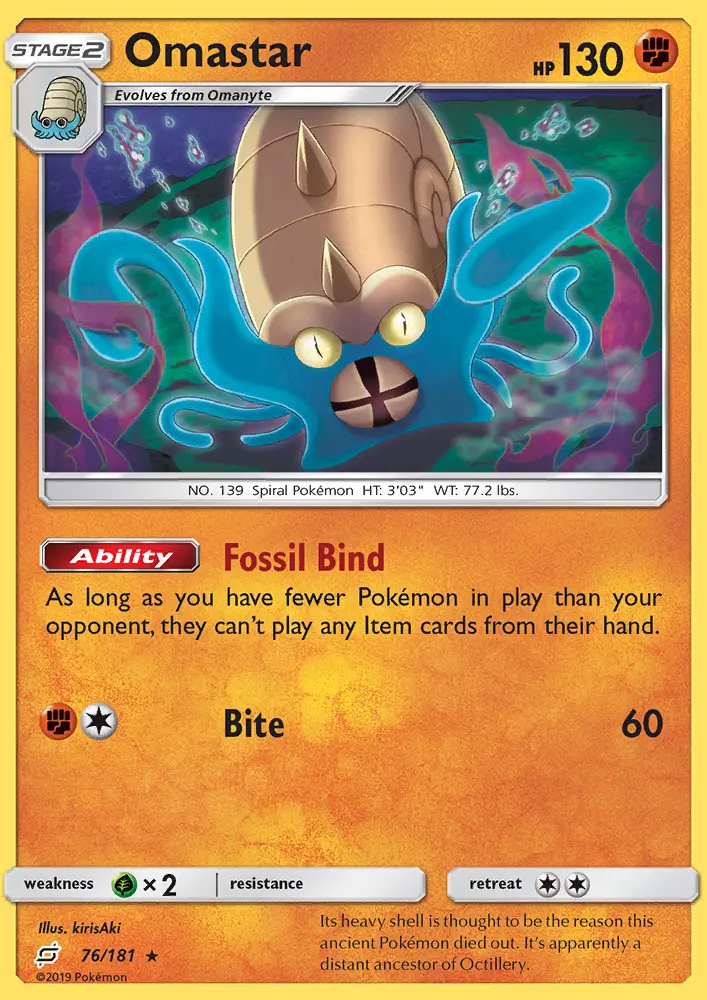 Team Up · #76/181$1–$2Rare
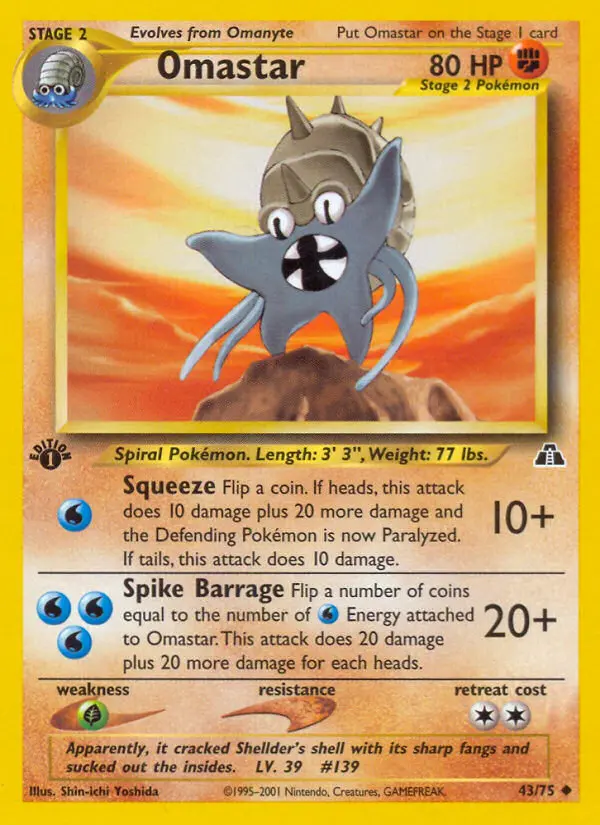 Neo Discovery · #43/75$1–$2Uncommon
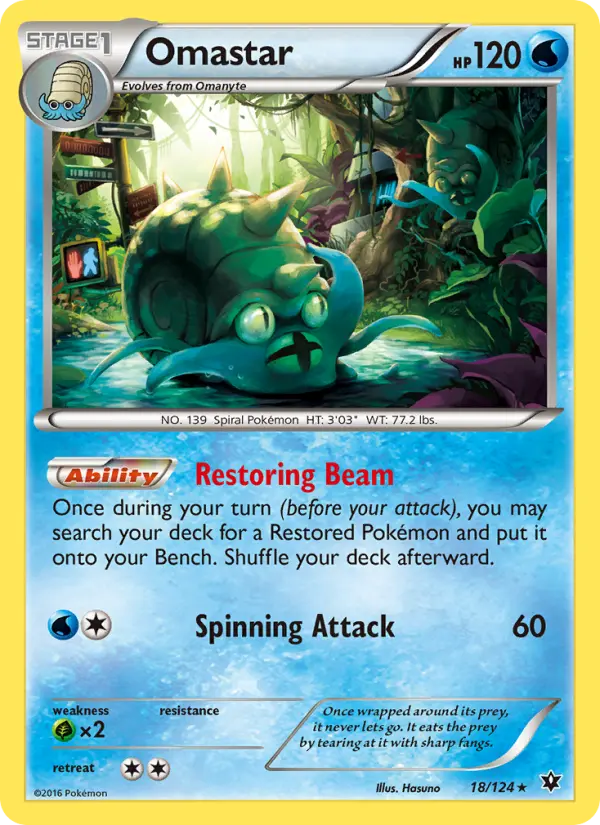 Fates Collide · #18/124under $1Rare
FAQ
How much is Omastar (40/62) worth?
Omastar (40/62), the Uncommon from Fossil, has an estimated ungraded market price of about $1.45. Note: 11 other cards named Omastar exist across the sets Riffle tracks, at very different values; check the collector number.
Which Omastar card is this, and how do I tell the versions apart?
This page covers Omastar (40/62), the Uncommon (about $1–$2) from Fossil.
The other versions: #23/144 from Skyridge (Rare, about $27–$36); #23/99 from Arceus (Rare, about $3–$4); #26/100 from Majestic Dawn (Rare, about $2–$4); #58/110 from Legendary Collection (Uncommon, about $2–$3); #23/92 from Legend Maker (Rare, about $2–$3); #19/100 from Sandstorm (Rare, about $2–$3); #20/108 from Power Keepers (Rare, about $1–$2); #76/181 from Team Up (Rare, about $1–$2); #43/75 from Neo Discovery (Uncommon, about $1–$2); #18/124 from Fates Collide (Rare, about under $1); #139/165 from 151 (Rare, about under $1).
The collector number printed at the bottom of the card is the reliable way to tell them apart.
Should I grade Omastar (40/62)?
Ahead after fees: with a 15% PSA 10 gem rate and current graded prices, grading a near-mint Omastar (40/62) is estimated to net about $15 more than selling it raw (est.).
Assumes ~$25/card bulk-rate grading (standard service costs more); ignores turnaround time, sub-9 grades, and shipping. A screen, not a promise.
Is Omastar (40/62) rare?
Omastar (40/62) is a Uncommon. PSA has graded 419 copies to date, so graded supply is measurable and growing.
How rare is a PSA 10 Omastar (40/62)?
Of the 419 copies PSA has graded, 15% earned a PSA 10. That's a low gem rate, so flawless copies are genuinely hard to come by. Grade-by-grade population and pop-over-time appear with Riffle premium.
More from Fossil
Should I grade Omastar?
Ahead after fees: grading nets ≈ +$15 vs selling raw (est.)
Expected grading return from this card’s own PSA grade mix (15% gem rate; grades under 8 valued at the PSA 8 price) and current graded market prices, minus a ~$25/card bulk-rate grading fee, compared against selling ungraded at market price. Standard grading service costs more; centering risk, turnaround time, and shipping aren’t included. The exact PSA 8/9/10 prices behind this are part of Riffle premium. Not financial advice.
PSA population & gem rate
From the PSA population census, captured monthly by Riffle. A 15% gem rate is on the hard side; PSA 10 copies of this card are scarcer than the typical modern chase card. Grade-by-grade population and pop-over-time appear with Riffle premium.
- $1–$2 is the middle 80% of clean market activity, not the cheapest listing and not the most hopeful one.
- The band spans about ±17% around its midpoint: a moderate spread.
- Sampled daily since July 28, 2026, current as of September 14, 2026.
When the data thins, the band widens and says so, it never fakes precision. Exact source prices are part of Riffle premium; the band is Riffle’s own figure to publish. How these numbers work →